Geriatrician
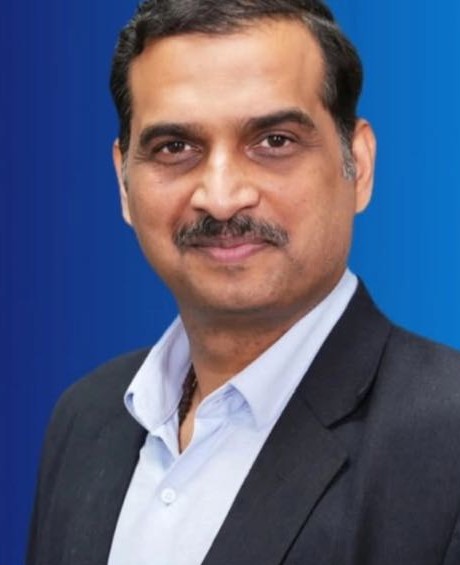
Dr Prasun Chatterjee
Reads the whole person: conditions, medicines, mobility, memory, mood and the family around them.
Interactive self-checks, the conditions families bring to Dr Chatterjee, and the questions people ask before they start. Free, in plain language, and nothing you enter leaves the page.
Start with everyday habits, then walking speed and frailty. Nothing you enter leaves this page.
Longevity is mostly ordinary things done early and consistently. Answer honestly for yourself or for a parent; each "no" is a place to start.
Movement · I walk or exercise for about 30 minutes on most days.
Strength · I do something for muscle strength at least twice a week.
Sleep · I usually sleep seven to eight hours.
Blood pressure · My blood pressure has been checked in the last year.
Blood sugar · My blood sugar has been checked in the last year.
Hearing and vision · My hearing and eyesight have been checked in the last two years.
Connection · I meet or talk with friends or family most days.
Medicines · My full medicine list has been reviewed by a doctor in the last year.
A self-reflection, not a medical test. Bring the "no" answers to your next appointment or a consultation.
Walking speed is one of the best predictors of staying independent. Mark four metres on the floor, walk it at your usual pace, and time it.
Walk with any usual aid and someone beside you. Stop if you feel unsteady.
The FRAIL scale is a validated screening questionnaire used by geriatricians. Answer for yourself or for the person you care for.
FHave you felt tired most or all of the time over the past four weeks?
RDo you have difficulty climbing one flight of stairs (about ten steps) on your own without resting?
ADo you have difficulty walking 100 metres (about one block) on your own?
IHas a doctor told you that you have five or more of: high blood pressure, diabetes, cancer, chronic lung disease, heart attack, heart failure, angina, asthma, arthritis, stroke, kidney disease?
LHave you lost more than 5% of your weight in the past year without trying (about 3 kg if you weigh 60 kg)?
0 robust · 1 to 2 pre-frail · 3 to 5 frail. A screening result, not a diagnosis.
Each medicine can interact with every other one. The number of pairs grows much faster than the number of tablets, which is why a review of the whole list matters.
Five or more regular medicines is the usual definition of polypharmacy; ten or more, hyper-polypharmacy. Never stop a medicine on your own. Bring the list to a review.
Creatinine on its own flatters older kidneys. The eGFR adjusts for age and sex. This is why Dr Chatterjee's consultation looks for kidney function before answering anything else.
CKD-EPI 2021 equation, for learning only. A single result is not a diagnosis; kidney function is read over time and alongside the rest of the report.
Tap a condition to see how Dr Chatterjee looks at it.
The heart, muscles, brain and every tablet in the box affect one another. Longevity medicine tracks a few plain numbers that tell you how the whole system is doing.
Minutes of moderate activity a week recommended for older adults by the WHO, plus muscle strengthening twice a week.
Regular medicines: the point where the risk from combinations rises steeply.
Metres per second of walking speed, associated with staying independent.
FRAIL score at which frailty is present, and still often reversible.
Every consultation involves more than one person. Meet the circle that geriatric care is built around.
Reads the whole person: conditions, medicines, mobility, memory, mood and the family around them.

Four conditions, nine tablets and a folder of reports. The reason this practice exists.

Sends the reports from her phone at night and asks in the language spoken at home.

Wants to keep his morning walk. Walking speed and balance are his numbers to watch.

Balance work, follow-up calls and the steady help between appointments.
Family members are illustrations and represent no real patient.

The consultation is a clinical information service built on Dr Chatterjee's reasoning and reviewed by him. It explains reports, flags what looks concerning, and helps you prepare for your treating doctor. It does not diagnose or prescribe. A second opinion is different: that is Dr Chatterjee's own signed written opinion.
Lab reports, discharge summaries, prescriptions, radiology reports, as PDFs or phone photos. If something cannot be read reliably, you are told rather than guessed at.
They are used to answer your question and are held securely under India's data protection framework. You can see and delete what is held.
Older patients have several health issues together, where organ-specific specialty care is not enough. Most organs age together, diseases present atypically, multiple medicines interact, and kidney and liver function change. A tool averaged across all ages to find a problem in a single organ cannot be right for an eighty-year-old with problems in several.
The consultation is free during the pilot. Access is by pilot code; request one on the Consult page. The written second opinion and video consultation are paid.
For chest pain, breathlessness, sudden weakness, confusion, a fall with injury, or any symptom that frightens you, go to a hospital now. In India, call 108 for an ambulance or 112 for emergency services.